How to Track Your Daily Spending
Tracking your daily spending is one of the simplest and most effective ways to improve your finances. Many people struggle with money not because they earn nothing, but because they do not know exactly where their money goes.
You may spend small amounts on transport, snacks, airtime, mobile money charges, lunch, drinks, or small household items without thinking much about them. Each expense may look small on its own, but when added together, the total can become surprisingly high.
That is why tracking your daily spending matters. It helps you become more aware of your habits, control unnecessary expenses, and make better financial decisions.
What Does Tracking Daily Spending Mean?
Tracking daily spending means recording the money you spend every day. This includes both small and large expenses.
The goal is not to make life difficult. The goal is to know where your money goes. When you understand your spending patterns, it becomes easier to budget, save, and reduce waste.
For example, if you spend money on transport, food, airtime, subscriptions, and personal shopping in one day, tracking helps you see the total instead of only remembering one or two items.
Why Tracking Your Spending Is Important
Tracking your spending is important for several reasons.
First, it helps you identify waste. Many people are shocked when they discover how much money goes to things they did not plan for.
Second, it helps you stay within your budget. A budget is only useful if you compare it with what you actually spend.
Third, it helps you save more. Once you identify unnecessary spending, you can reduce it and direct the difference toward savings or debt repayment.
Fourth, it builds discipline. When you record expenses daily, you become more intentional with money.
Finally, it reduces financial stress. Money becomes easier to manage when you have a clear picture of what is happening.
Step 1: Choose a Simple Tracking Method
You do not need an expensive tool to track your spending. Use a method that is easy for you to maintain.
You can track spending using:
- A small notebook
- Your phone notes
- A spreadsheet
- A budgeting app
- Bank statements
- Mobile money statements
The best method is the one you will actually use consistently.
If you prefer writing by hand, carry a small notebook or keep one at home. If you prefer digital tools, your phone notes or a spreadsheet can work well.
Step 2: Record Every Expense
The most important rule is this: record every expense, even the small ones.
This includes:
- Transport
- Tea or coffee
- Snacks
- Lunch
- Airtime
- Data bundles
- Mobile money charges
- Shopping
- Utility payments
- School expenses
- Loan payments
- Entertainment
- Personal items
Do not ignore small purchases. Small daily spending is often where money leaks most.
For example, if you spend KSh 100 here and KSh 200 there several times a day, you may not notice it immediately. But by the end of the week or month, it can become a large amount.
Step 3: Record the Amount and Purpose
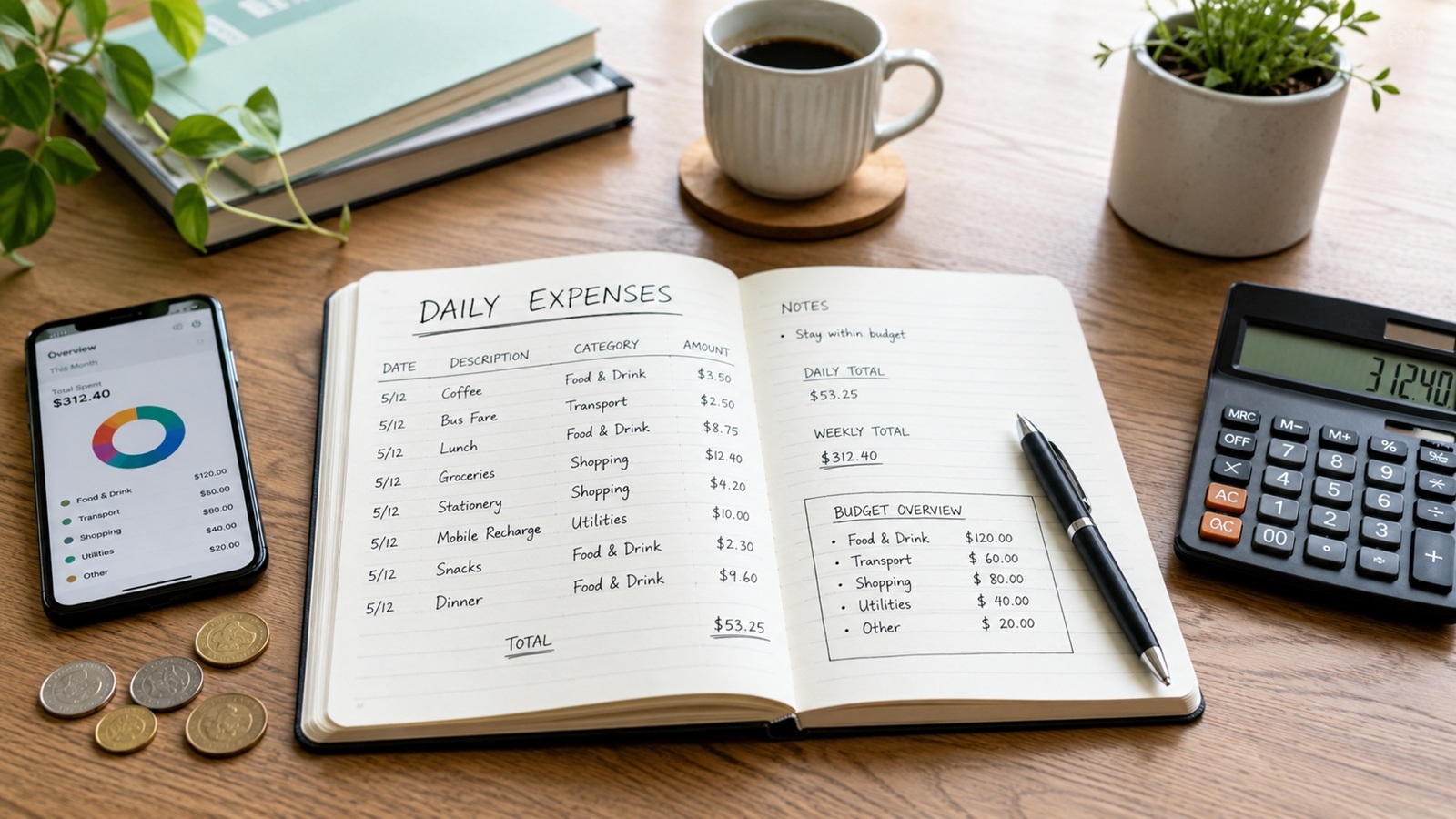
Each time you spend money, write down:
- The date
- What you bought
- The amount
- The category
For example:
| Date | Item | Category | Amount |
|---|---|---|---|
| 20 May | Bus fare | Transport | KSh 100 |
| 20 May | Lunch | Food | KSh 250 |
| 20 May | Airtime | Communication | KSh 50 |
| 20 May | Snacks | Personal spending | KSh 80 |
This makes it easier to review your habits later.
Step 4: Create Spending Categories
Categories help you organize your expenses clearly.
Common categories include:
- Food
- Transport
- Rent
- Utilities
- Airtime and data
- Savings
- Debt repayment
- Family support
- Health
- Personal spending
- Entertainment
- Business expenses
Once expenses are grouped into categories, you can quickly see where most of your money goes.
For example, you may discover that food and transport take the biggest share, or that personal spending is much higher than you expected.
Step 5: Update Your Record Daily
Do not wait until the end of the week or month to remember what you spent. You may forget many things.
It is better to record spending immediately after making a purchase, or at least at the end of the day.
This habit only takes a few minutes, but it makes your record more accurate.
Daily updates also help you notice problems early. If you overspend during the first week of the month, you can adjust before the month ends.
Step 6: Review Your Spending at the End of the Week
At the end of each week, review your record.
Ask yourself:
- How much did I spend this week?
- Which category took the most money?
- Were there any unnecessary purchases?
- Did I spend according to my budget?
- Which habits need to change?
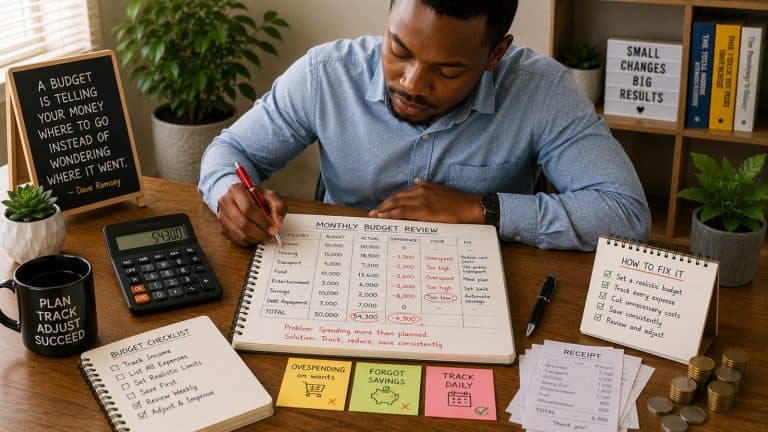
A weekly review helps you stay in control. It is easier to correct spending mistakes after one week than after a whole month.
Step 7: Compare Spending with Your Budget
If you already have a budget, compare your actual spending with your plan.
For example, if your monthly budget for food is KSh 7,000, check whether your weekly and daily food spending is likely to stay within that amount.
If your actual spending is much higher than planned, ask why. Maybe prices increased, or maybe you are overspending in ways you did not notice.
Tracking gives you the information needed to adjust your budget realistically.
Step 8: Identify Spending Leaks
A spending leak is money that goes out regularly without adding much value to your life.
Examples may include:
- Frequent snacks
- Extra transport when walking was possible
- Daily drinks
- Unplanned mobile money charges
- Impulse purchases
- Paid subscriptions you do not use
- Small online purchases
- Betting or gambling
- Eating out too often
Tracking your spending helps you identify these leaks clearly.
Once you see them, you can decide which ones to reduce or remove.
Step 9: Set a Spending Limit for Problem Areas
After identifying your weak areas, set limits.
For example, if you spend too much on snacks, you can decide on a weekly snack budget. If transport costs are too high, you can look for ways to reduce unnecessary trips.
You do not need to cut everything completely. The goal is balance and awareness.
Setting limits makes your spending more intentional.
Step 10: Track Cash and Digital Spending
Some people only track one type of spending and forget the other. If you use both cash and digital payments, record both.
Track:
- Cash payments
- Mobile money spending
- Card payments
- Bank transfers
- Online purchases
This gives you a full picture of your financial behavior.
Sometimes digital spending feels less painful than cash spending, which can make it easier to overspend. Tracking all forms of spending helps prevent this.
Example of Daily Spending Tracking
Here is a simple one-day example:
| Item | Amount |
|---|---|
| Breakfast | KSh 100 |
| Bus fare | KSh 100 |
| Lunch | KSh 250 |
| Airtime | KSh 50 |
| Snacks | KSh 80 |
| Mobile money charge | KSh 30 |
| Total | KSh 610 |
Now imagine spending KSh 610 every day on similar items. In one week, that becomes KSh 4,270. In one month, it becomes a much larger amount.
This is why tracking daily spending is powerful. It helps you see the bigger picture.
Common Mistakes to Avoid
When tracking your spending, avoid these mistakes:
- Ignoring small expenses
- Recording spending irregularly
- Forgetting digital payments
- Being dishonest with yourself
- Giving up too early
- Tracking without reviewing
- Not using the information to improve
Tracking is not only about writing numbers down. It is about learning from them.
How Tracking Daily Spending Helps You Save
When you track spending, you become more aware of how often money leaves your hands. This awareness naturally helps reduce waste.
For example, if you notice that you spend KSh 3,000 per month on unplanned snacks and drinks, you may decide to reduce that amount and save part of it instead.
Tracking also helps you plan better for bills, transport, and food so that you are less likely to run short before the month ends.
In this way, spending awareness supports saving habits.
Final Thoughts
Tracking your daily spending is a simple habit, but it can make a big difference in your financial life.
It helps you understand your habits, reduce unnecessary expenses, stay within your budget, and save more effectively.
You do not need a complicated system. Start with a notebook, phone notes, or a simple spreadsheet. Record every expense, review it regularly, and use what you learn to make better decisions.
The more aware you are of your spending, the more control you gain over your money.
Disclaimer
This article is for educational purposes only. It should not be taken as professional financial, investment, tax, legal, or business advice. Always consult a qualified professional before making major financial decisions.