How to Build Better Money Habits One Step at a Time
Better money habits are small actions that help you manage your finances more wisely. They include budgeting, saving, tracking spending, avoiding unnecessary debt, planning before buying, and reviewing your progress regularly.
Many people think they need a big income before they can improve their finances. That is not always true. A higher income can help, but habits matter too. If money is not managed well, even a good income can disappear quickly.
Good money habits are built slowly. You do not need to change everything in one day. Start with one simple habit, repeat it consistently, and improve over time.
Why Money Habits Matter
Your financial life is shaped by daily choices. Small decisions such as buying snacks, taking mobile loans, ignoring savings, or spending without a plan may look harmless at first. But when repeated often, they can create serious financial pressure.
Better money habits can help you:
- Save more consistently
- Reduce unnecessary spending
- Avoid careless borrowing
- Pay bills on time
- Build an emergency fund
- Work toward financial goals
- Reduce financial stress
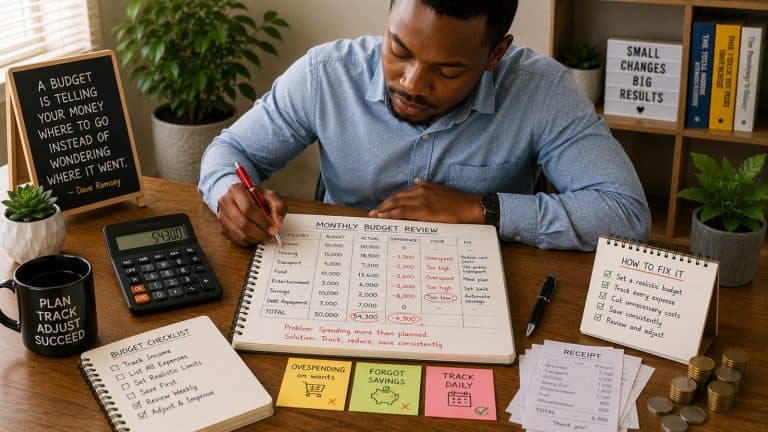
A budget is one useful tool because it helps you plan how to spend money, track what you spend, and use that information to plan better next month.
Start with Awareness
The first step is to know what is happening with your money.
Ask yourself:
How much money do I receive?
Where does my money go?
What do I spend too much on?
Do I save regularly?
Do I borrow often?
Do I know how much debt I owe?
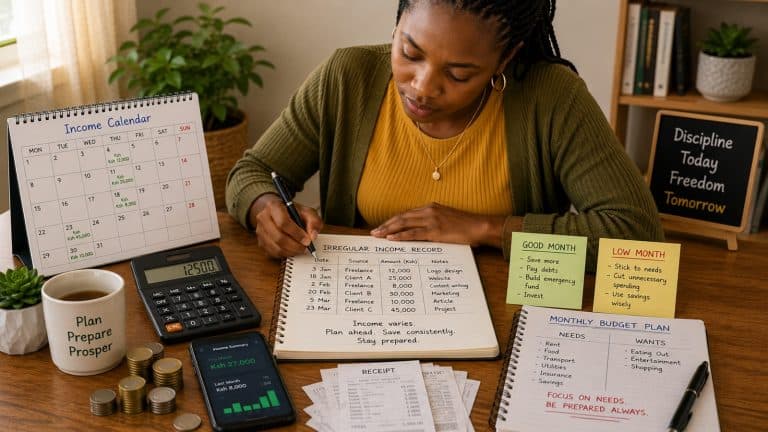
You cannot improve what you do not understand. For one month, track your income and expenses. This will show your real money habits.
Build a Budgeting Habit
A budget is a simple plan for your money. It helps you decide what should happen before the money is spent.
Your budget should include:
- Income
- Food
- Rent
- Transport
- Utilities
- Savings
- Debt repayment
- Emergency fund
- Personal spending
Do not make the budget too complicated. A simple budget you can follow is better than a perfect budget you ignore.
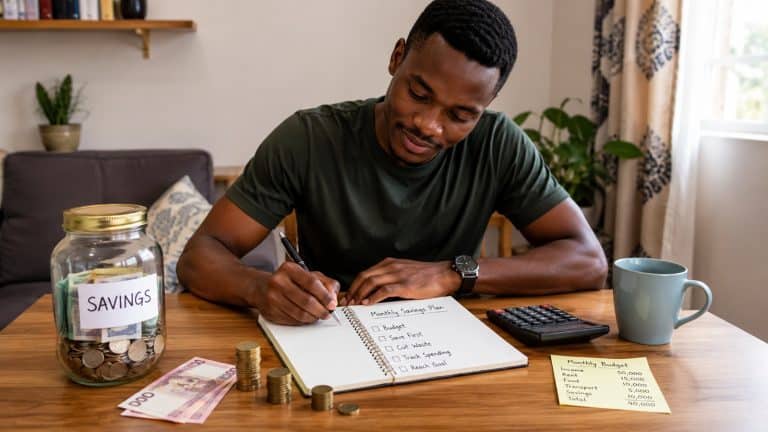
Save Something First
One of the best money habits is saving before spending.
Many people spend first and save what remains. The problem is that money often finishes before anything is saved.
Try this approach:
Receive income
Save a small amount
Pay important bills
Spend what remains carefully
Even if you start with a small amount, the habit matters. Saving KSh 100 regularly is better than waiting to save KSh 10,000 someday.
Track Daily Spending
Tracking spending helps you see where money goes. It also makes you more careful before buying unnecessary things.
Record:
- Food
- Transport
- Airtime
- Data
- Snacks
- Shopping
- Mobile money charges
- Subscriptions
- Entertainment
You can use a notebook, phone notes, spreadsheet, or budgeting app.
At the end of the week, review your spending. Ask what was necessary and what can be reduced.
Reduce One Bad Habit at a Time
Do not try to fix everything at once. Choose one habit to improve.
For example:
This month, I will reduce eating out.or:
This month, I will stop borrowing for wants.or:
This month, I will track every expense.Small improvements are easier to maintain.
Avoid Borrowing for Wants
Debt can become dangerous when it is used for things that are not necessary. Borrowing for entertainment, fashion, betting, social pressure, or impulse shopping can create future stress.
Before borrowing, ask:
Do I really need this loan?
Can I repay it on time?
What is the total cost?
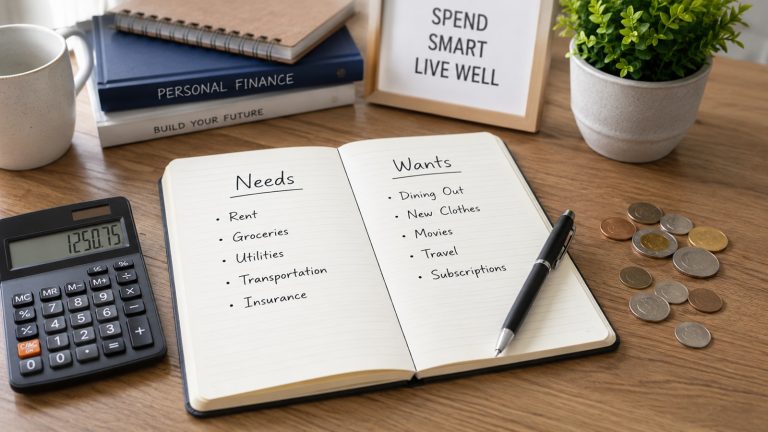
Is this for a need or a want?
The FTC advises people struggling with debt to speak directly with creditors and request payment plans they can afford, instead of paying companies unnecessarily to do it for them.
Build an Emergency Fund
An emergency fund is money set aside for unexpected expenses such as medical bills, urgent travel, repairs, or loss of income. The CFPB describes it as a cash reserve specifically for unplanned expenses or financial emergencies.
Start small. Your first target can be:
KSh 1,000
KSh 5,000
KSh 10,000
One week of basic expenses
Once you reach the first target, increase it slowly.
Review Your Progress Monthly
At the end of each month, ask:
Did I save?
Did I reduce waste?
Did I borrow unnecessarily?
Did I follow my budget?
What improved?
What should I change next month?
Progress does not have to be perfect. What matters is that you keep improving.
Final Thoughts
Better money habits are built one step at a time. You do not need to change your entire life overnight.
Start by tracking spending, creating a simple budget, saving something regularly, avoiding unnecessary debt, and reviewing your progress.
Small habits repeated consistently can create big financial improvement over time.
Disclaimer
This article is for educational purposes only. It should not be taken as professional financial, investment, tax, legal, lending, or business advice. Always consult a qualified professional before making major financial decisions.