Beginner’s Guide to Saving Money Every Month
Saving money every month is one of the most important personal finance habits. It helps you prepare for emergencies, reduce financial stress, avoid unnecessary borrowing, and work toward future goals.
Many beginners think saving is only possible when income is high. But saving is not only about the amount. It is also about discipline and consistency. Even a small amount saved regularly can make a difference over time.
The goal is to start with what you can manage and improve slowly.
Why Monthly Saving Matters
Monthly saving helps you prepare before problems appear. Without savings, even a small emergency can force you into debt.
Savings can help with:
- Medical expenses
- Rent
- School fees
- Emergency transport
- Business needs
- Job loss
- Family support
- Future purchases
- Debt repayment
An emergency fund is especially important because it gives you money to use when unplanned expenses happen.
Start with a Clear Reason
Saving is easier when you know why you are saving.
Your goal may be:
Emergency fund
School fees
Rent deposit
Business capital
Debt repayment
A laptop
Medical needs
Family support
Instead of saying:
I want to save money.Say:
I want to save KSh 10,000 in five months.A clear goal gives your savings direction.
Know Your Monthly Income
Before saving, know how much money comes in.
Include:
- Salary
- Business income
- Freelance work
- Allowances
- Side hustle income
- Family support
- Rental income
- Any other income
If your income changes each month, budget using your lowest expected income. This prevents you from planning with money that may not come.
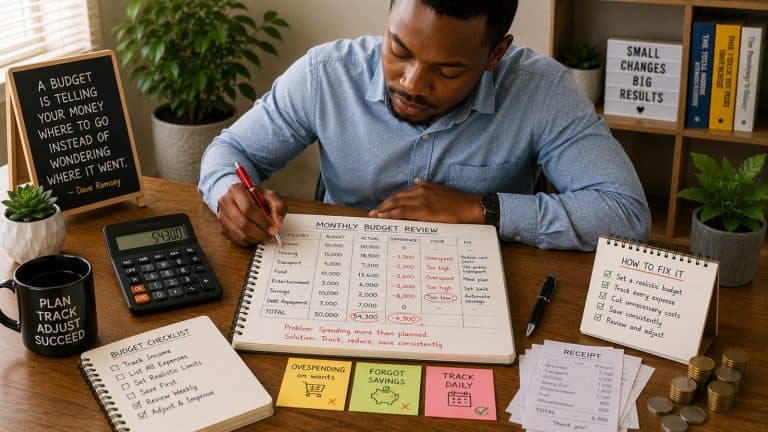
Create a Simple Budget
A budget helps you decide where your money should go. Consumer.gov explains that a budget is used monthly by planning spending, writing down daily spending, and reviewing whether the plan worked.
Your budget can include:
| Category | Amount |
|---|---|
| Income | KSh 30,000 |
| Rent | KSh 8,000 |
| Food | KSh 7,000 |
| Transport | KSh 4,000 |
| Utilities | KSh 2,000 |
| Savings | KSh 3,000 |
| Personal spending | KSh 6,000 |
Your numbers will be different, but the idea is the same.
Save First Before Spending
The best beginner saving rule is simple:
Save first, spend after.If you wait to save what remains, you may save nothing. When money comes in, set aside your saving amount immediately.
For example:
Income: KSh 20,000
Savings first: KSh 1,000
Budget remaining: KSh 19,000
Saving first makes saving a priority.
Start Small
Do not wait until you can save a large amount.
You can start with:
KSh 50 per day
KSh 200 per week
KSh 500 per month
5 percent of your income
10 percent of your income
The amount can grow later. First, build the habit.
Separate Savings from Spending Money
If your savings stay in the same place as your daily spending money, you may spend them without noticing.
Keep savings in a separate place such as:
- Savings account
- Mobile money savings wallet
- SACCO account
- Savings jar
- Locked savings feature
- Money market fund, if you understand it
The goal is to reduce temptation.
Cut Small Spending Leaks
Small expenses can quietly reduce your ability to save.
Watch spending on:
- Snacks
- Airtime
- Data
- Mobile money charges
- Eating out
- Delivery fees
- Subscriptions
- Impulse shopping
For example:
KSh 200 per day x 30 days = KSh 6,000 per monthReducing only part of that spending can create savings.
Use Extra Income Wisely
If you receive extra money, save part of it.
Extra income may come from:
- Bonus
- Overtime
- Gift
- Side hustle
- Business profit
- Refund
- Freelance work
Do not spend all extra money immediately. Put part of it toward your goal.
Track Your Progress
Tracking keeps you motivated.
Example:
| Month | Amount Saved | Total Savings |
|---|---|---|
| January | KSh 1,000 | KSh 1,000 |
| February | KSh 1,500 | KSh 2,500 |
| March | KSh 2,000 | KSh 4,500 |
Seeing progress can encourage you to continue.
Avoid Common Saving Mistakes
Avoid these mistakes:
- Waiting to earn more before saving
- Saving without a goal
- Spending first and saving later
- Keeping savings with spending money
- Using savings for wants
- Giving up after one difficult month
- Borrowing while trying to save without a plan
Saving is not always easy, but it becomes easier with practice.
Final Thoughts
Saving money every month is possible even if you start small. What matters most is consistency.
Set a clear goal, create a simple budget, save first, separate savings from spending money, and track your progress.
Small monthly savings can build confidence, reduce debt pressure, and help you prepare for the future.
Disclaimer
This article is for educational purposes only. It should not be taken as professional financial, investment, tax, legal, lending, or business advice. Always consult a qualified professional before making major financial decisions.