Why Record Keeping Matters for Small Businesses
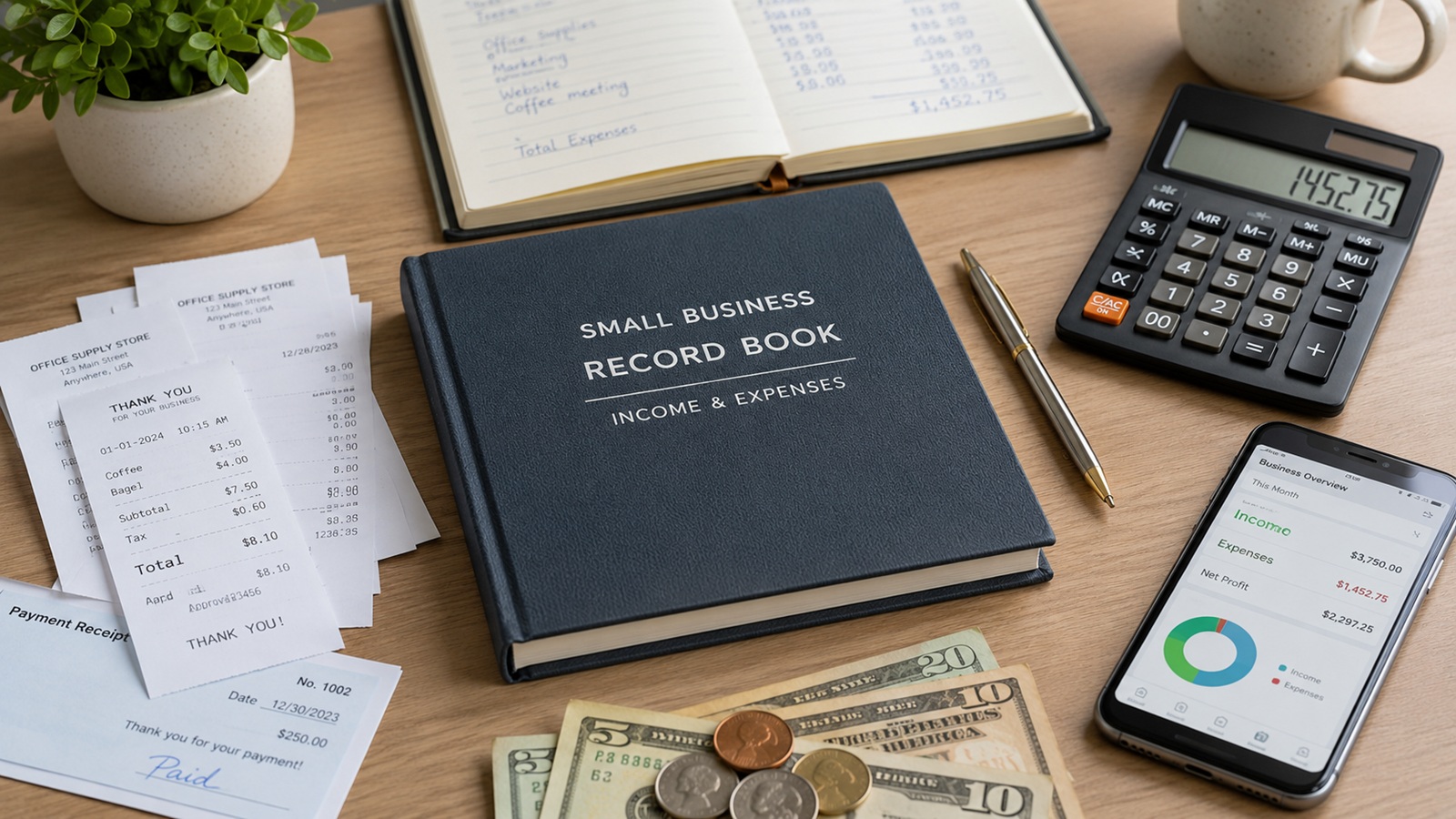
Record keeping is one of the most important habits in a small business. It means writing down, storing, and organizing important business information such as sales, expenses, stock purchases, customer debts, supplier payments, receipts, invoices, wages, and cash balances.
Many small business owners focus mainly on selling. Selling is important, but it is not enough. A business also needs clear records to know whether it is making money, losing money, growing, or facing financial problems.
Good records help a business owner make better decisions. The IRS explains that good records help business owners monitor business progress, identify sources of income, keep track of expenses, prepare financial statements, prepare tax returns, and support items reported on tax returns.
What Is Record Keeping?
Record keeping means keeping written or digital evidence of business activities.
This may include:
- Daily sales records
- Expense records
- Receipts
- Invoices
- Stock records
- Customer debt records
- Supplier payment records
- Payroll records
- Bank statements
- Mobile money statements
- Tax records
- Business licenses
- Loan records
The records can be kept in a notebook, spreadsheet, accounting software, receipt file, mobile app, or cloud storage system. The method can be simple, but it must be consistent.
Why Small Businesses Need Records
Small businesses need records because memory is not reliable. A business owner may think they remember all sales and expenses, but small transactions are easy to forget.
For example, a shop owner may remember big sales but forget small daily expenses such as transport, packaging, mobile money charges, small stock purchases, and personal withdrawals. These small amounts can affect profit.
Records help show the true picture of the business.
1. Records Help You Know Whether the Business Is Growing
Without records, it is hard to know whether your business is improving.
Good records show:
- How much you sell daily
- Which days are busiest
- Which products sell most
- Which services bring more income
- Whether expenses are increasing
- Whether profit is improving
- Whether customers are paying on time
The IRS notes that records can show whether a business is improving, which items are selling, and what changes may be needed.
This helps you make decisions based on facts, not guesswork.
2. Records Help You Track Sales
Daily sales records show how much money the business receives.
Your sales records should include:
- Date
- Product or service sold
- Quantity sold
- Amount received
- Payment method
- Customer name, if needed
For example:
| Date | Item Sold | Payment Method | Amount |
|---|---|---|---|
| 24 May | Groceries | Cash | KSh 2,500 |
| 24 May | Household items | Mobile money | KSh 1,800 |
| 24 May | Delivery service | Bank transfer | KSh 1,200 |
Tracking sales helps you know how much income the business actually receives each day.
3. Records Help You Track Expenses
Expenses reduce business profit. If you do not record expenses, you may think the business is making more money than it really is.
Common small business expenses include:
- Stock purchases
- Rent
- Wages
- Transport
- Electricity
- Internet
- Airtime
- Packaging
- Repairs
- Licenses
- Loan repayments
- Delivery costs
- Mobile money charges
- Bank charges
Even small expenses should be recorded. Over time, they can become a large amount.
4. Records Help You Manage Cash Flow
Cash flow is the movement of money in and out of the business.
Good records show whether the business has enough money to pay suppliers, buy stock, pay rent, clear bills, and handle emergencies.
Business Queensland notes that good financial records help businesses manage cash, reduce losses, meet legal and tax requirements, and improve financial analysis.
When you track money properly, you can notice cash shortages early and respond before the business gets into trouble.
5. Records Help You Control Stock
Stock is one of the biggest areas where small businesses lose money.
A stock record helps you know:
- What you bought
- How much you bought
- Buying price
- Selling price
- Quantity sold
- Quantity remaining
- Fast-moving products
- Slow-moving products
- Damaged or expired stock
If you do not track stock, you may overbuy slow-moving products or fail to restock items customers want.
Good stock records help you avoid tying too much cash in goods that are not selling.
6. Records Help You Manage Customer Debts
Many small businesses sell goods or services on credit. Credit can help keep customers, but it can also damage cash flow if not controlled.
A customer debt record should show:
- Customer name
- Phone number
- Amount owed
- Date of credit sale
- Payment deadline
- Amount paid
- Balance remaining
Do not rely on memory when customers owe money. Write it down clearly.
This makes follow-up easier and reduces disputes.
7. Records Help You Manage Supplier Debts
Small businesses may also buy stock on credit from suppliers.
A supplier record should show:
- Supplier name
- Amount owed
- Stock received
- Date received
- Payment deadline
- Amount paid
- Balance remaining
This helps you avoid late payments, damaged supplier relationships, and surprise debts.
Good supplier records also help you plan cash flow better.
8. Records Help You Separate Business and Personal Money
Many small businesses struggle because personal money and business money are mixed together.
If business sales are used for personal spending without records, the owner may not know whether the business is weak or whether money is being withdrawn too often.
Record personal withdrawals clearly.
For example:
| Date | Description | Amount |
|---|---|---|
| 24 May | Owner withdrawal | KSh 1,000 |
| 25 May | Household support from business | KSh 2,000 |
This helps you understand how much money leaves the business for personal use.
9. Records Help with Tax and Legal Requirements
Business records can support tax filing, licenses, audits, and other legal obligations.
The IRS explains that supporting documents include sales slips, paid bills, invoices, receipts, deposit slips, and canceled checks, and that these documents support entries in business books and tax returns.
Tax rules differ by country, so small business owners should check local requirements or work with a qualified accountant.
Still, the principle is the same: proper records make compliance easier.
10. Records Help When Applying for Loans
If a business owner wants a loan, grant, partnership, or investor support, records can help show the condition of the business.
A lender may want to know:
- Sales history
- Expenses
- Profit
- Stock levels
- Debt levels
- Bank or mobile money statements
- Business cash flow
- Existing loans
Without records, it is hard to prove that the business can repay a loan.
Good records can make the business look more serious and organized.
11. Records Help You Make Better Decisions
Business decisions should not be based only on feelings.
Records help you answer questions such as:
- Which product sells best?
- Which expense is too high?
- Which customer delays payment?
- Which supplier gives better prices?
- Which month has better sales?
- Should I increase stock?
- Should I reduce certain products?
- Can I afford to hire someone?
- Can I afford a loan?
When you have records, decisions become clearer.
12. Records Help Prevent Theft and Losses
Poor records create room for money to disappear unnoticed.
This may happen through:
- Unrecorded sales
- Missing stock
- Wrong change
- Fake expenses
- Unchecked mobile money transactions
- Unclear staff handling of cash
- Personal spending from business money
Records do not prevent every problem, but they make it easier to notice mistakes, losses, or suspicious patterns.
13. Records Save Time
Poor records waste time.
If receipts are lost, sales are not written down, and expenses are mixed up, it becomes difficult to prepare reports or understand the business.
Good records save time because information is already organized.
This is especially useful when preparing tax documents, checking debts, reviewing monthly performance, or working with an accountant.
14. Records Help You Plan for the Future
A business owner who keeps good records can plan better.
Records can help you estimate:
- How much stock to buy
- When sales are likely to rise
- When sales may slow down
- How much rent or wages to prepare
- How much cash the business needs
- Whether prices should change
- Whether expansion is possible
Without records, planning becomes guesswork.
Simple Records Every Small Business Should Keep
At minimum, a small business should keep these records:
| Record Type | What It Tracks |
|---|---|
| Sales record | Money received from customers |
| Expense record | Money spent by the business |
| Stock record | Goods bought, sold, and remaining |
| Customer debt record | Customers who owe the business |
| Supplier debt record | Money owed to suppliers |
| Cash book | Daily cash in and cash out |
| Bank/mobile money statement | Digital money movement |
| Receipt file | Proof of purchases and payments |
| Owner withdrawal record | Money taken for personal use |
This is enough for many small businesses to start.
Paper Records vs Digital Records
You can keep records on paper or digitally.
Paper records are simple and easy to start. A notebook, receipt file, and sales book can work well for a small business.
Digital records can be easier to search, calculate, back up, and share with an accountant. You can use spreadsheets, accounting apps, mobile tools, or cloud storage.
The best method depends on your business size, skill level, budget, and comfort with technology.
Whichever method you use, make sure records are accurate and updated regularly.
How Often Should You Update Records?
Update business records daily if possible.
Daily updates help you avoid forgetting transactions.
A good routine is:
Morning: Check opening cash and stock
During the day: Record sales and expenses
Evening: Count cash, check mobile money, update records
End of week: Review totals
End of month: Review profit, stock, debts, and expenses
A few minutes every day can prevent serious confusion later.
Common Record Keeping Mistakes
Avoid these mistakes:
- Recording sales but ignoring expenses
- Keeping receipts in random places
- Mixing personal and business spending
- Not recording customer debts
- Not checking mobile money statements
- Relying only on memory
- Failing to count stock
- Not recording owner withdrawals
- Updating records only once in a while
- Losing documents
- Not backing up digital records
These mistakes can make the business look profitable when it is actually struggling.
Simple Daily Record Keeping Template
You can start with this daily template:
| Date | Description | Money In | Money Out | Balance |
|---|---|---|---|---|
| 24 May | Opening cash | KSh 5,000 | – | KSh 5,000 |
| 24 May | Sales | KSh 12,000 | – | KSh 17,000 |
| 24 May | Stock purchase | – | KSh 6,000 | KSh 11,000 |
| 24 May | Transport | – | KSh 500 | KSh 10,500 |
| 24 May | Owner withdrawal | – | KSh 1,000 | KSh 9,500 |
This simple record helps you know how money moved during the day.
How to Start Record Keeping Today
Start simple.
You do not need a complex accounting system immediately. Begin with:
- One notebook for sales
- One notebook or section for expenses
- One folder for receipts
- One stock list
- One debt list
- Weekly review of mobile money and bank statements
As the business grows, you can move to spreadsheets or accounting software.
The important thing is to start now.
Final Thoughts
Record keeping matters because it helps small businesses understand what is really happening. It shows sales, expenses, stock, debts, cash flow, profit, and financial progress.
A business without records is difficult to manage. The owner may be working hard but still not know whether the business is growing or losing money.
Good records help you make better decisions, manage cash, pay suppliers, collect debts, prepare for taxes, apply for loans, and plan for growth.
Start with simple daily records. Over time, this habit can make your business stronger and easier to manage.
Disclaimer
This article is for educational purposes only. It should not be taken as professional financial, tax, accounting, legal, lending, or business advice. Always consult a qualified accountant, financial adviser, tax professional, or business expert before making major business decisions.