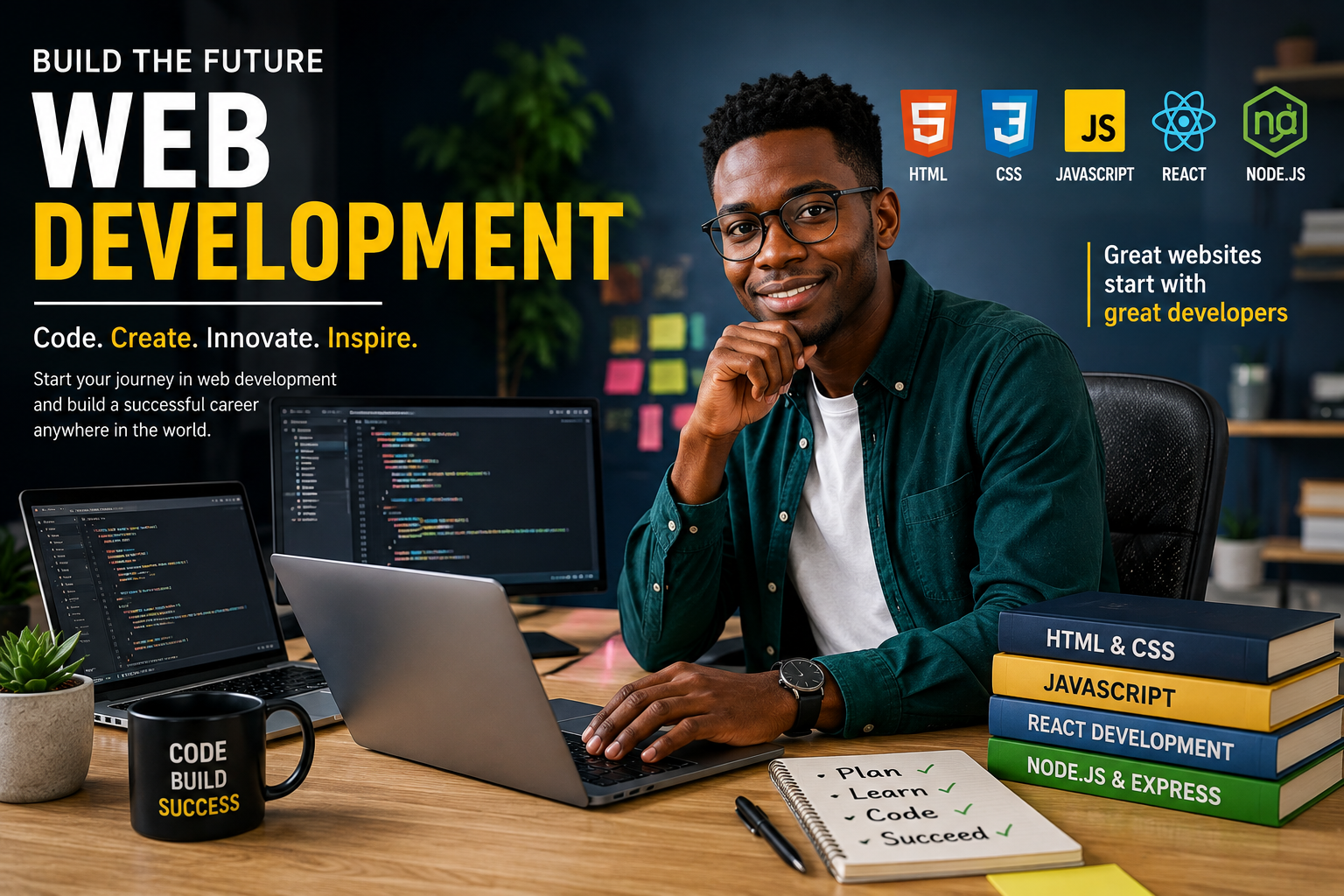
How to start a career in web Development as a freelancer in Kenya
How to Start a Career in Web Development
Learn how to start a successful career in web development. Discover the skills you need, the best programming languages to learn, how to build a portfolio, and how to land your first web development job. The main purpose of the career is to help you know how to create websites and able to have earnings from the career.
Introduction
The internet has transformed the way businesses, governments, schools, and individuals operate. Almost every organization today relies on websites or web applications to reach customers, provide services, and grow their brand. As a result, web development has become one of the most in-demand and rewarding careers in the digital economy.
Whether you dream of working for a technology company, becoming a freelance developer, launching your own web design business, or building your own online products, web development offers countless opportunities. It is also one of the few careers where your skills and portfolio often matter more than having a formal university degree.
The best part is that anyone with dedication, a computer, and an internet connection can begin learning web development. Many successful developers started by teaching themselves through online tutorials, practice projects, and real-world experience.
This guide will walk you through the essential steps to start a successful career in web development, from learning the fundamentals to landing your first client or job.
What Is Web Development?
Web development is the process of creating, designing, building, and maintaining websites and web applications. It combines programming, design, and problem solving and user experience to create functional and attractive websites.
Web developers build everything from personal blogs and business websites to online stores, learning platforms, banking systems, and social media applications.
There are three main areas of web development:
- Front-End Development
Front-end developers create the parts of a website that users see and interact. They focus on layout, colors, navigation, animations, and responsiveness.
Common technologies include:
- HTML
- CSS
- JavaScript
- React
- Vue.js
- Bootstrap
- Tailwind CSS
- Back-End Development
Back-end developers build the server-side functionality that powers websites behind the scenes.
They work with:
- Databases
- Authentication
- APIs
- Business logic
- Security
- Hosting
Popular back-end languages include:
- JavaScript (Node.js)
- Python
- PHP
- Java
- C#
- Ruby
- Full-Stack Development
A full-stack developer understands both front-end and back-end development.
Many employers and freelance clients highly value full-stack developers because they can build complete web applications from start to finish.
Why Choose a Career in Web Development?
Web development offers several advantages:
- High demand across industries
- Excellent earning potential
- Opportunities to work remotely
- Flexible freelance careers
- Continuous learning and growth
- Ability to build your own business
- Freedom to work with clients worldwide
As businesses continue moving online, skilled web developers will remain valuable for years to come.
Step 1: Learn the Basics of the Web
Before writing code, understand how websites work.
Learn concepts such as:
- Domains
- Web hosting
- Browsers
- HTTP and HTTPS
- DNS
- Responsive design
- Accessibility
Understanding these basics makes learning programming much easier.
Step 2: Master HTML
HTML (Hypertext Markup Language) forms the structure of every webpage.
You should learn how to create:
- Headings
- Paragraphs
- Images
- Tables
- Forms
- Buttons
- Navigation menus
- Lists
HTML is the foundation of web development.
Step 3: Learn CSS
CSS controls how websites look.
You will learn to:
- Style text
- Add colors
- Create layouts
- Build responsive websites
- Add animations
- Improve user experience
Modern CSS frameworks such as Bootstrap and Tailwind CSS can help you build websites faster.
Step 4: Learn JavaScript
JavaScript adds interactivity to websites.
With JavaScript, you can build:
- Sliders
- Interactive forms
- Calculators
- Games
- Dashboards
- Dynamic web pages
It is one of the most important programming languages for web developers.
Step 5: Learn Version Control
Professional developers use Git to track changes in their projects.
Git allows you to:
- Save project history
- Collaborate with teams
- Restore previous versions
- Share projects online
Most developers also use GitHub to display their work.
Step 6: Learn a Front-End Framework
Once you are comfortable with JavaScript, consider learning a modern framework such as React.
Frameworks help developers build faster, more scalable and maintainable web applications.
Step 7: Learn Back-End Development
To build complete applications, explore a back-end language and database.
Popular combinations include:
- Node.js + MongoDB
- PHP + MySQL
- Python + PostgreSQL
Back-end skills enable you to create user accounts, process payments, and store data securely.
Step 8: Build Real Projects
Employers and clients want proof of your skills.
Create projects such as:
- Personal portfolio website
- Business website
- Blog
- Online store
- Booking system
- Weather app
- Finance dashboard
- School management system
Each project strengthens your portfolio.
Step 9: Create an Online Portfolio
Your portfolio should include:
- Your biography
- Skills
- Projects
- Contact details
- Testimonials (if available)
- Downloadable CV
A professional portfolio demonstrates your abilities far better than simply listing technologies.
Step 10: Start Freelancing
Freelancing is an excellent way to gain experience.
Begin by helping:
- Friends
- Family
- Local businesses
- Churches
- Schools
- Community organizations
These projects build confidence and create valuable references.
Step 11: Continue Learning
Technology changes quickly.
Stay updated by:
- Reading blogs
- Following industry experts
- Watching tutorials
- Taking online courses
- Practicing regularly
Continuous learning is essential for long-term success.
Common Mistakes Beginners Should Avoid
- Trying to learn everything at once
- Copying code without understanding it
- Ignoring responsive design
- Giving up too early
- Avoiding real projects
- Neglecting communication skills
- Failing to build a portfolio
Career Opportunities
After gaining experience, you can work as:
- Front-End Developer
- Back-End Developer
- Full-Stack Developer
- WordPress Developer
- Web Designer
- UI Developer
- Software Engineer
- Freelance Developer
- Technical Consultant
Conclusion
Starting a career in web development is one of the smartest investments you can make in today’s digital economy. The field offers flexibility, strong earning potential, and opportunities to work with clients and employers around the world.
Success will not happen overnight, but consistent practice, continuous learning, and building real-world projects will set you apart. Focus on mastering the fundamentals, create a portfolio that displays your skills, and never stop improving.
Whether your goal is to secure a remote job, freelance internationally, or launch your own technology business, web development provides the skills and opportunities to achieve it.
Start today. Every line of code you write brings you one-step closer to becoming a professional web developer.
Frequently Asked Questions
Can I become a web developer without a degree?
Yes. Many employers and clients value practical skills, experience, and a strong portfolio more than formal qualifications.
How long does it take to learn web development?
With consistent study and practice, many beginners can build solid foundational skills in 6–12 months. Mastery comes with continued experience.
Is web development still a good career?
Yes. Demand for skilled web developers remains strong as more businesses and services move online.
What programming language should I learn first?
Start with HTML and CSS, and then learn JavaScript. These are the core technologies for front-end web development and provide a strong foundation for learning additional tools and frameworks.
Can I work remotely as a web developer?
Yes. Many companies hire remote web developers, and freelancing allows you to work with clients from anywhere in the world.