Personal Finance Checklist for Beginners
Personal finance can feel confusing when you are just starting. There are many things to think about: income, expenses, saving, debt, emergencies, goals, and future planning.
The good news is that you do not need to do everything at once. You can start with a simple checklist and improve step by step.
This beginner checklist will help you build a strong foundation.
1. Know Your Income
Write down all money you receive.
Include:
- Salary
- Business income
- Freelance work
- Allowances
- Support from family
- Rental income
- Side hustle income
Knowing your income helps you plan realistically.
2. Track Your Spending
For one month, record everything you spend.
Include:
- Food
- Rent
- Transport
- Airtime
- Data
- Bills
- Shopping
- Debt repayment
- Entertainment
- Mobile money charges
Tracking helps you see where money goes. Consumer.gov recommends writing down daily spending and reviewing whether it matched your plan.
3. Create a Simple Budget
A budget tells your money what to do.
Your budget should include:
Income
Needs
Savings
Debt repayment
Wants
Emergency fund
Keep it simple.
4. Separate Needs from Wants
Needs are important for daily life. Wants are optional.
Needs:
- Food
- Rent
- Transport
- Healthcare
- Utilities
- School fees
Wants:
- Entertainment
- Luxury items
- Frequent eating out
- Impulse shopping
Needs should come first.
5. Start Saving
Save something regularly, even if it is small.
Start with:
KSh 50 per day
KSh 200 per week
KSh 500 per month
Consistency is more important than starting big.
6. Build an Emergency Fund
An emergency fund protects you from unexpected expenses. The CFPB describes it as money set aside for unplanned expenses or financial emergencies.
Your first target can be:
KSh 1,000
KSh 5,000
KSh 10,000
One week of basic expenses
7. Know Your Debts
List every debt you owe.
Include:
- Lender
- Amount owed
- Due date
- Interest or fees
- Monthly payment
- Balance
Do not hide from your debts. Clear information helps you create a plan.
8. Avoid Borrowing for Wants
Avoid loans for:
- Fashion
- Betting
- Parties
- Entertainment
- Phone upgrades
- Impulse shopping
Borrowing for wants can create unnecessary pressure.
9. Set Financial Goals
Write down clear goals.
Examples:
- Save KSh 10,000
- Clear KSh 20,000 debt
- Start a business
- Save for school fees
- Buy a laptop
- Build emergency savings
A clear goal gives your money direction.
10. Review Your Finances Monthly
At the end of every month, ask:
How much did I earn?
How much did I spend?
How much did I save?
Did I borrow?
What can I improve?
Monthly review helps you improve.
11. Keep Basic Records
Keep records of:
- Income
- Expenses
- Savings
- Debt
- Receipts
- Important bills
- School fees
- Business expenses, if any
Records reduce confusion.
12. Learn Continuously
Personal finance is a skill. Keep learning about:
- Budgeting
- Saving
- Debt
- Investing basics
- Digital finance safety
- Business money management
- Financial goals
Learning helps you make better choices.
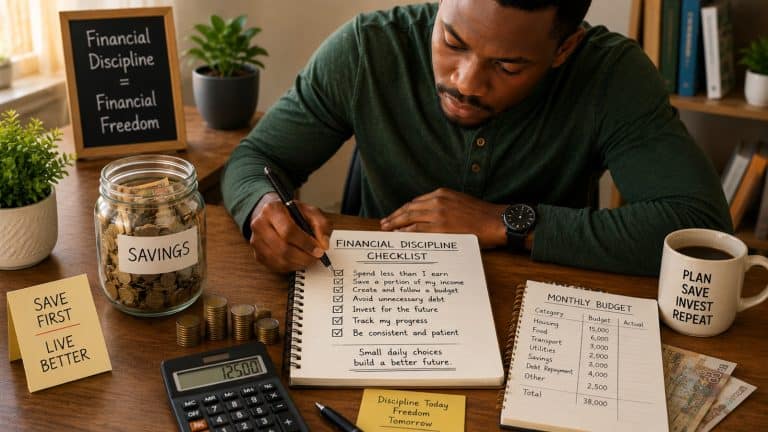
Simple Beginner Checklist
Use this checklist:
Know my income
Track daily spending
Create a monthly budget
Separate needs and wants
Save something regularly
Build an emergency fund
List all debts
Avoid borrowing for wants
Set financial goals
Review progress monthly
Keep records
Keep learning
Final Thoughts
Personal finance does not have to be complicated. Start with the basics: know your income, track spending, budget, save, reduce debt, and set clear goals.
You do not need to be perfect. You only need to begin and keep improving.
Small steps taken consistently can lead to better financial control over time.
Disclaimer
This article is for educational purposes only. It should not be taken as professional financial, legal, tax, investment, lending, or business advice. Always consult a qualified professional before making major financial decisions.