How to Price Products Without Making Losses
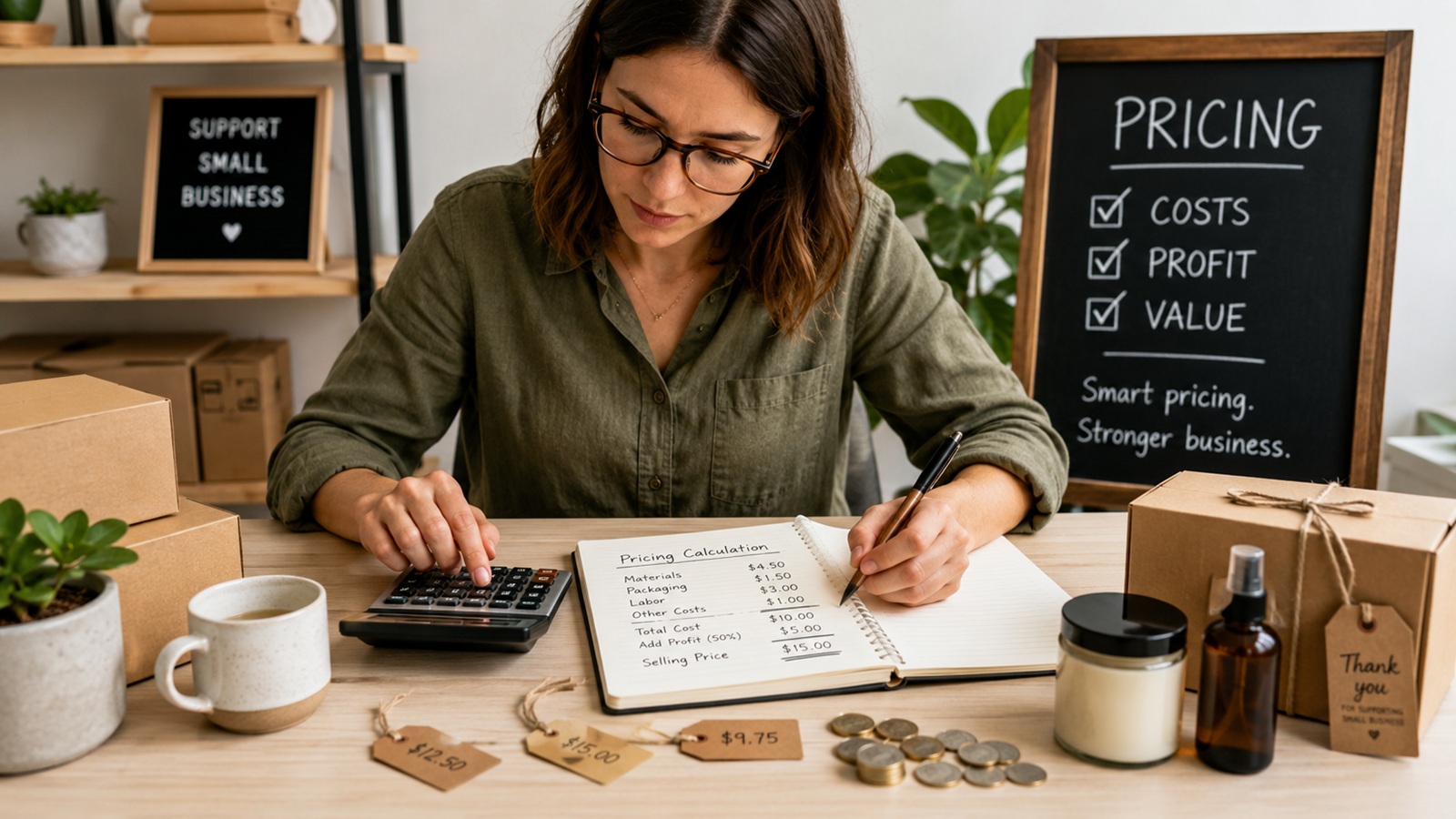
Pricing is one of the most important decisions in a small business. If your prices are too low, you may sell many products but still fail to make profit. If your prices are too high, customers may avoid buying from you. The goal is to find a price that covers your costs, gives you profit, and still makes sense to your customers.
Many small business owners price products by copying competitors or guessing what customers can afford. This can be risky. Competitor prices can guide you, but they should not be copied blindly. Business.gov.au advises businesses to use competitor prices as a guide, while still making sure their own prices cover costs and reflect the value of the product or service.
Good pricing is not only about adding a random profit. It is about understanding your costs, your market, your customers, and your business goals.
Why Pricing Matters
Pricing matters because it affects almost every part of your business.
Your price affects:
- Profit
- Cash flow
- Sales volume
- Customer perception
- Stock movement
- Business growth
- Ability to pay expenses
- Ability to restock
- Ability to survive slow periods
A business can fail even when it has customers if the prices are wrong. For example, if you sell a product at KSh 100 but the total cost of buying, transporting, packaging, and selling it is KSh 110, you are losing KSh 10 on every sale.
This is why pricing must be done carefully.
Pricing Is Not the Same as Guessing
Some business owners set prices based on feelings.
They may say:
Other shops sell at this price, so I will also sell at this price.or:
Customers will not buy if I increase the price.or:
I just want to sell quickly.These thoughts are understandable, but they can lead to losses.
Good pricing should be based on numbers. You need to know how much the product costs you, how much extra expense is involved, and how much profit you need.
Step 1: Know the Buying Cost
The first cost to identify is the buying cost.
This is the amount you pay to get the product from the supplier.
For example:
Buying cost of one item: KSh 500If you buy 10 pieces at KSh 5,000, then each piece costs KSh 500 before other expenses.
But the buying cost alone is not enough. You must include other costs before deciding the selling price.
Step 2: Add Transport Costs
Many small businesses forget transport when pricing products.
If you travel to collect stock, pay delivery fees, use boda boda, pay bus fare, or spend fuel, that cost should be included in pricing.
For example:
You buy 10 items at KSh 500 each.
Total buying cost: KSh 5,000
Transport cost: KSh 500
The transport cost per item is:
KSh 500 ÷ 10 = KSh 50So the real cost per item is now:
KSh 500 + KSh 50 = KSh 550If you ignore transport, you may think you are making profit when you are not.
Step 3: Add Packaging Costs
Packaging may include bags, boxes, wrapping, labels, tape, containers, printing, or delivery packaging.
For some businesses, packaging is small. For others, it can be a major cost.
If packaging costs KSh 20 per item, add it to the product cost.
Example:
Buying cost: KSh 500
Transport per item: KSh 50
Packaging: KSh 20
Total cost so far: KSh 570
Your selling price must be above this if you want to make profit.
Step 4: Include Business Expenses
A product does not only carry its own buying cost. It also helps pay for general business expenses.
These may include:
- Rent
- Electricity
- Water
- Internet
- Wages
- Business licenses
- Cleaning
- Marketing
- Repairs
- Mobile money charges
- Bank charges
- Storage
- Security
- Delivery costs
- Loan repayments
These expenses may not be attached to one item directly, but they still affect the business. If your prices do not help cover them, your business may struggle.
Step 5: Know the Difference Between Direct and Indirect Costs
Direct costs are costs directly connected to the product.
Examples:
- Buying price
- Raw materials
- Packaging
- Transport for that product
- Labor used to make the product
Indirect costs are general business costs that support the business.
Examples:
- Rent
- Electricity
- Internet
- Salaries
- Marketing
- Licenses
- Equipment repairs
Both direct and indirect costs matter. A good price should help cover both.
Step 6: Calculate the Real Cost Per Product
Let us use a simple example.
Suppose you sell handbags.
| Cost Item | Amount |
|---|---|
| Buying price per bag | KSh 800 |
| Transport per bag | KSh 50 |
| Packaging per bag | KSh 30 |
| Mobile money charge estimate | KSh 20 |
| Other business cost contribution | KSh 100 |
| Total cost per bag | KSh 1,000 |
This means the bag costs your business about KSh 1,000 before profit.
If you sell it at KSh 950, you are making a loss.
If you sell it at KSh 1,000, you are only covering cost.
If you sell it above KSh 1,000, then you can start making profit.
Step 7: Decide Your Profit Margin
Profit margin is the part of the selling price that remains as profit after costs.
For example, if your total cost is KSh 1,000 and you sell at KSh 1,300, your profit is KSh 300.
Selling price: KSh 1,300
Total cost: KSh 1,000
Profit: KSh 300
That does not mean the whole KSh 1,300 is profit. This is a common mistake. Only the amount left after costs is profit.
Many pricing methods use cost-plus pricing, where a business calculates its costs and adds a markup percentage to reach a selling price. QuickBooks describes cost-plus pricing as adding a fixed percentage to the cost of goods or services to arrive at the selling price.
Step 8: Understand Markup
Markup is the amount added to the cost to create the selling price.
Example:
Product cost: KSh 1,000
Markup: KSh 300
Selling price: KSh 1,300
Markup can be shown as a percentage.
Markup percentage = Profit ÷ Cost × 100Using the example:
KSh 300 ÷ KSh 1,000 × 100 = 30%So the markup is 30 percent.
Step 9: Understand Profit Margin
Profit margin is slightly different from markup.
Profit margin = Profit ÷ Selling Price × 100Using the same example:
Profit: KSh 300
Selling price: KSh 1,300
KSh 300 ÷ KSh 1,300 × 100 = 23.1%So, even though the markup is 30 percent, the profit margin is about 23 percent.
This difference matters because many business owners confuse markup and margin.
Step 10: Compare Market Prices
After calculating your cost and desired profit, check the market.
Look at:
- Competitor prices
- Customer expectations
- Product quality
- Location
- Demand
- Availability
- Brand value
- Customer service
- Delivery convenience
Competitor prices are useful, but they should not control your business completely. Business.gov.au advises businesses not to compare only price, but also product features, quality, and customer service because these can affect customer value.
If your cost is too high compared with the market price, do not simply sell at a loss. Instead, review your supplier, transport, packaging, and operating costs.
Step 11: Do Not Undercut Competitors Blindly
Some businesses reduce prices to attract customers. This can work in some cases, but it can also be dangerous.
If you sell too cheaply, you may attract customers but lose money.
Before lowering prices, ask:
- Can I still cover all costs?
- Will I still make profit?
- Am I lowering price for a short promotion or permanently?
- Can the business survive at this price?
- Am I competing on price only?
A business should not reduce prices just because competitors are cheaper. They may have lower costs, different suppliers, or larger stock volumes.
Step 12: Consider Customer Value
Customers do not always buy the cheapest product. Sometimes they pay more because they trust the quality, service, convenience, location, packaging, or reliability.
Customer value may come from:
- Better quality
- Faster service
- Honest communication
- Clean packaging
- Convenient location
- Delivery option
- Better after-sale support
- Product knowledge
- Reliable stock
- Friendly customer care
If your product offers better value, your price does not always have to be the lowest.
Step 13: Avoid Pricing Below Cost
Selling below cost means your selling price is lower than what the product costs your business.
This may happen when:
- You forget transport costs
- You ignore packaging
- You copy competitors
- You give too many discounts
- You do not track expenses
- You sell slow stock too cheaply
- You ignore mobile money or bank charges
- You want quick cash
Sometimes a business may sell below cost intentionally to clear old or damaged stock. But doing this regularly can destroy the business.
Step 14: Watch Hidden Costs
Hidden costs are expenses that business owners easily forget.
Examples include:
- Mobile money withdrawal charges
- Bank transaction fees
- Delivery losses
- Damaged products
- Expired stock
- Packaging
- Discounts
- Customer returns
- Staff meals or allowances
- Marketing costs
- Storage costs
- Small repairs
- Unpaid customer debts
Hidden costs can quietly reduce profit.
When pricing, try to include a small allowance for these costs.
Step 15: Include Losses and Damaged Stock
Some products may get damaged, expire, break, or remain unsold.
For example:
- Food may expire
- Clothes may get stains
- Electronics may develop faults
- Fruits may spoil
- Packaging may tear
- Customers may return items
If your business often experiences losses, your pricing should account for that risk.
This does not mean overcharging customers. It means understanding that not every item produces full profit.
Step 16: Use a Simple Pricing Formula
You can use this simple formula:
Selling Price = Total Cost Per Product + Desired ProfitExample:
Total cost per product: KSh 750
Desired profit: KSh 250
Selling price: KSh 1,000
This is simple and useful for beginners.
You can also use percentage markup:
Selling Price = Cost + MarkupExample:
Cost: KSh 800
Markup: 25%
Markup amount: KSh 200
Selling price: KSh 1,000
Step 17: Example of Product Pricing
Let us price a simple product.
Suppose you sell school bags.
| Cost Item | Amount |
|---|---|
| Buying price | KSh 900 |
| Transport per bag | KSh 80 |
| Packaging | KSh 30 |
| Mobile money charge estimate | KSh 20 |
| Business expense contribution | KSh 120 |
| Total cost | KSh 1,150 |
You want a profit of KSh 350 per bag.
Selling price = KSh 1,150 + KSh 350
Selling price = KSh 1,500
So, if the market can accept it, you can sell the bag at KSh 1,500.
If competitors sell similar bags at KSh 1,300, you need to ask:
- Are my bags better quality?
- Is my supplier too expensive?
- Is transport too high?
- Can I reduce packaging cost?
- Can I negotiate a better buying price?
- Can I offer better value to justify the price?
Do not automatically reduce the price before checking the numbers.
Step 18: Price Services Carefully Too
Pricing is not only for physical products. Services also need proper pricing.
Examples of services include:
- Hairdressing
- Repair services
- Cleaning
- Consulting
- Printing
- Transport
- Tuition
- Photography
- Web design
- Catering
- Delivery services
For services, include:
- Time spent
- Skill level
- Materials used
- Transport
- Communication costs
- Equipment cost
- Rent or workspace
- Taxes or licenses
- Desired profit
Many service providers undercharge because they forget to price their time.
If a service takes three hours and you charge too little, you may be busy but not profitable.
Step 19: Review Prices Regularly
Prices should not remain the same forever.
Costs can change because of:
- Inflation
- Supplier price changes
- Fuel costs
- Rent increases
- Exchange rate changes
- New taxes or licenses
- Higher wages
- Transport changes
- Product shortages
- Increased demand
If your costs increase but your prices remain the same, your profit reduces.
The U.S. Chamber of Commerce suggests reviewing prices periodically to understand customer response and business performance.
For small businesses, a monthly or quarterly review can help.
Step 20: Know When to Increase Prices
Increasing prices can feel uncomfortable, especially if you fear losing customers. But sometimes it is necessary.
You may need to increase prices when:
- Supplier prices rise
- Transport becomes expensive
- Rent increases
- Profit becomes too low
- Stock costs increase
- Product quality improves
- Customer demand grows
- The old price no longer covers costs
When increasing prices, communicate clearly where necessary. You can also improve packaging, service, speed, or reliability to help customers accept the new price.
Step 21: Be Careful with Discounts
Discounts can attract customers, but they can also reduce profit.
Before giving a discount, calculate whether the business still makes money.
Example:
Selling price: KSh 1,500
Total cost: KSh 1,150
Profit: KSh 350
If you give a discount of KSh 300:
New selling price: KSh 1,200
Profit: KSh 50
You are still making profit, but very little.
If you give a discount of KSh 400:
New selling price: KSh 1,100
Loss: KSh 50
This means a discount can quickly turn profit into loss.
Step 22: Avoid Selling on Credit Without Pricing Risk
Credit sales can affect pricing. If customers delay payment, your business may lack cash to restock or pay expenses.
If you often sell on credit, consider:
- Risk of delayed payment
- Cost of follow-up
- Bad debts
- Cash flow pressure
- Need for working capital
Do not give credit carelessly. Even a good price will not help if customers do not pay.
Step 23: Consider Break-Even Point
The break-even point is where your business covers its costs but does not make profit yet.
For example, if your monthly business expenses are KSh 30,000, your sales must generate enough profit to cover that amount before the business truly earns extra money.
The U.S. Small Business Administration provides break-even analysis tools to help businesses estimate sales needed to cover costs and understand future profits.
Knowing your break-even point helps you understand how much you need to sell to survive.
Step 24: Use Bundles Carefully
A bundle means selling several products together.
For example:
Buy a school bag, notebook, and pen together at a special price.Bundles can increase sales, but they should still be profitable.
Before creating a bundle, calculate the total cost of all items and the profit left after the discount.
Do not bundle products so cheaply that you lose money.
Step 25: Keep Records to Support Pricing
Good pricing depends on good records.
You need records for:
- Buying costs
- Transport expenses
- Packaging costs
- Daily sales
- Discounts given
- Damaged stock
- Customer debts
- Supplier prices
- Profit per item
- Slow-moving products
Without records, pricing becomes guesswork.
Record keeping and pricing work together. The better your records, the easier it is to set correct prices.
Step 26: Understand Fast-Moving and Slow-Moving Products
Fast-moving products sell quickly and bring cash back into the business.
Slow-moving products may stay on shelves for a long time and tie up money.
You may price fast-moving products with a smaller margin if they sell in high volume. Slow-moving products may need a better margin, but only if customers are willing to pay.
For slow stock, you may eventually offer discounts, but do it carefully to avoid heavy losses.
Step 27: Do Not Ignore Taxes and Licenses
Taxes, licenses, and government fees can affect business cost.
Depending on your country and business type, you may need to plan for:
- Business permits
- VAT
- Income tax
- County or local authority fees
- Professional licenses
- Health or safety licenses
- Import duties
These costs should not be ignored. If they are part of your business expenses, your pricing should help cover them.
Tax rules differ, so consult a qualified accountant or tax professional.
Step 28: Pricing for Online Sales
If you sell online, include extra costs such as:
- Delivery charges
- Packaging
- Payment platform fees
- Website costs
- Advertising
- Product photography
- Return handling
- Customer communication
- Internet costs
Online selling can look cheap, but it still has expenses.
If you offer free delivery, make sure the cost is included in the price or covered by the profit.
Step 29: Common Pricing Mistakes to Avoid
Avoid these common mistakes:
- Copying competitors blindly
- Forgetting transport costs
- Ignoring packaging
- Not including rent and utilities
- Confusing sales with profit
- Giving discounts without calculating
- Selling on credit without control
- Not reviewing prices
- Ignoring slow-moving stock
- Not tracking damaged goods
- Pricing too low because of fear
- Ignoring customer value
- Not keeping records
These mistakes can make a business look active while still losing money.
Simple Pricing Checklist
Before setting a price, ask:
What is my buying cost?
What is my transport cost?
What is my packaging cost?
What are my hidden costs?
What business expenses must this product support?
What profit do I want?
What are competitors charging?
What value do I offer customers?
Can customers accept this price?
Will I still profit after discounts or charges?
If you cannot answer these questions, pause before setting the price.
Final Thoughts
Pricing products without making losses requires more than guessing. You must know your real costs, add a reasonable profit, compare the market, and understand what customers value.
A good price should cover buying cost, transport, packaging, business expenses, hidden costs, and profit. It should also make sense to customers.
Do not be afraid to review and adjust prices when costs change. A business that prices correctly has a better chance of surviving, growing, and serving customers well.
The goal is not just to sell. The goal is to sell profitably.
Disclaimer
This article is for educational purposes only. It should not be taken as professional financial, tax, accounting, legal, pricing, or business advice. Always consult a qualified accountant, financial adviser, tax professional, or business expert before making major business decisions.